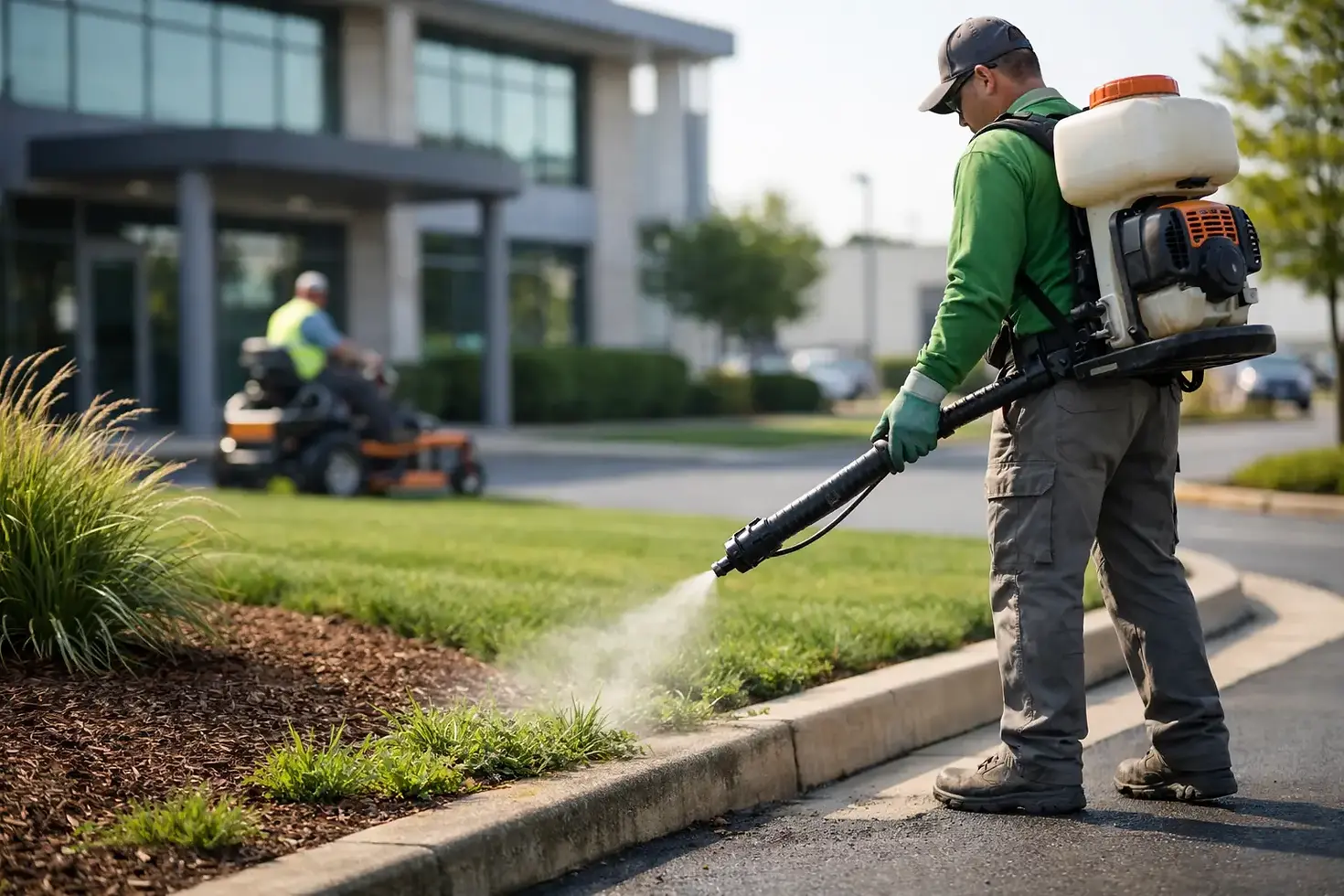
Commercial Weed Control That Keeps Sites Presentable
Weed control is often noticed only when it has been missed. A few weeds along a kerb, across a paved entrance or around a building can quickly make an otherwise well-kept site look neglected. On larger commercial grounds, the issue is not simply appearance. Unchecked growth can affect access routes, create trip hazards, damage surfaces and add avoidable work later in the season.
For property managers, parish councils, schools, care homes and estates, the most effective approach is planned, professional attention that fits alongside mowing, strimming and general grounds maintenance. The aim is straightforward: clean edges, clear hard surfaces and outdoor areas that remain orderly throughout the year.
Why commercial weed control needs a plan
Weeds do not grow to a convenient timetable. Their growth depends on weather, surface type, footfall, mowing patterns and how regularly an area is inspected. Warm, wet conditions can bring rapid growth in paving joints, gravel margins and around fixed features, while neglected boundaries may become harder to manage over a longer period.
A reactive visit can deal with an immediate problem, but it is rarely the most efficient way to maintain a large site. Scheduled weed control allows problem areas to be identified early and treated at an appropriate time. This keeps work measured and helps maintain a consistently high standard rather than allowing growth to become established.
This matters particularly where grounds create a first impression. The entrance to a care home, the paths around a church, the perimeter of a business premises or the public spaces managed by a parish council all reflect on the organisation responsible for them. Neat presentation gives visitors, residents, staff and contractors confidence that the site is being looked after properly.
The areas that need the closest attention
Hard surfaces are often the first places where weeds become visible. Paths, block paving, kerb lines, car parks, service areas and paved entrances provide small gaps where wind-blown seeds can settle. Once established, weeds can hold moisture and debris in place, making a surface look untidy and more difficult to clear.
Edges also need regular attention. Grass growing into kerb lines, around signposts, at the base of walls or beside fencing can make even freshly mown grounds appear unfinished. Precision mowing and strimming create the clean lines people expect, but those results are easier to maintain when weed growth is kept under control.
Beds, borders and less frequently used areas can also become sources of recurring problems. If growth is allowed to seed, it can spread into nearby paths and maintained grass. A professional maintenance programme considers the whole site, not just the most obvious area seen from the road.
Different surfaces require different methods
There is no single treatment that suits every site. The right method depends on the location, the type and extent of growth, the time of year and how the area is used. A busy access path requires a different approach from a gravel boundary or a quiet area around estate buildings.
Professional weed control begins with assessing those conditions. Treatment must be suitable for the surface and carried out responsibly, with attention to product instructions, weather conditions and the need to keep people, pets and site users safe. Timing matters. Applying a treatment during unsuitable weather or when growth is not actively taking it in can reduce effectiveness and lead to unnecessary repeat work.
In some cases, physical clearance is the practical choice, particularly where accumulated debris and established growth need removing before routine maintenance can take over. In others, a targeted treatment at the right stage will provide cleaner, longer-lasting results. The value lies in making the correct decision for the ground rather than applying the same response everywhere.
Weed control and site safety
Appearance is a major reason to manage weeds, but safety is just as relevant. Growth through paving joints can create uneven surfaces over time. Weeds around drainage channels may trap leaf litter and debris. Vegetation at the edge of walkways can narrow access, obscure kerbs or make routes look poorly maintained.
For schools, care homes and public-facing premises, clear routes are particularly important. Visitors may be unfamiliar with the grounds, and regular users need outdoor areas that are clean and easy to move around. At commercial premises, maintained entrances and parking areas also help present a professional image to customers, suppliers and staff.
The objective is not to make grounds look overly formal. It is to keep them usable, safe and well managed. A site can retain its character while paths, boundaries and key access areas remain clear and presentable.
How weed control fits into regular grounds maintenance
Weed management works best when it is part of a wider maintenance schedule. Mowing alone will not deal with growth in hard surfaces, around obstacles or along boundaries. Equally, weed control without regular grass cutting, strimming and seasonal clearance can leave a site looking inconsistent.
A coordinated programme means each task supports the next. Commercial mowing keeps larger grassed areas tidy and healthy in appearance. Strimming finishes areas that machinery cannot reach. Hedge maintenance keeps boundaries defined. Weed control prevents unwanted growth from undermining those clean, high quality results.
This joined-up approach is useful for sites with several different outdoor spaces. A school may have playing-field edges, pedestrian paths, staff parking and building surrounds. An estate may have extensive grass, entrance routes and outlying boundaries. A reliable contractor can schedule work around the practical needs of the site, rather than treating each task as a separate issue.
Frequency depends on the property
The right frequency depends on how quickly weeds return and how visible an area is. A prominent entrance, public footpath or regularly used car park may require closer monitoring than an infrequently used service corner. Seasonal weather also changes the workload. Spring and early summer often bring the fastest growth, while autumn clearance helps prevent debris and seed heads from building up.
For larger grounds, a routine inspection is often as valuable as the treatment itself. It allows early signs of growth to be dealt with before they become widespread. It also gives the customer a clearer picture of what is being maintained and why particular areas need attention.
There is a balance to strike. Treating too late can mean more intensive work is needed. Treating more often than conditions require is not efficient. A sensible maintenance schedule is based on the site, its use and the standard expected by those responsible for it.
What dependable service looks like
For organisations managing outdoor space, reliability is central. Grounds maintenance needs to happen when expected, with work completed to a consistent standard and without the customer having to chase for updates. Weed control is no exception.
A dependable service means turning up on schedule, using suitable professional equipment and paying attention to the smaller details that affect the finished appearance. It means recognising that a tidy path is not fully tidy if growth remains around the edges, and that a freshly cut lawn needs clean boundaries to look complete.
It also means working with consideration for the property. Schools, care homes, churches and business sites have different routines and responsibilities. Maintenance should be planned around access, visitors and day-to-day operations wherever possible. Clear communication and a practical approach make ongoing work easier for everyone involved.
TrueCut Groundcare provides planned grounds maintenance for commercial and larger private sites across Worcester and the surrounding area, combining weed control with the regular work needed to keep outdoor spaces orderly and presentable.
Keeping standards high through the seasons
Weeds will always be part of managing outdoor grounds. The difference is whether they are dealt with as a small, routine task or allowed to become a visible problem. Regular attention protects the presentation of the site, supports safer access and reduces the amount of catch-up work needed later.
For any organisation responsible for larger grounds, the most useful question is not whether weeds will return, but whether there is a dependable plan to deal with them before they affect the standard of the property.


Comments